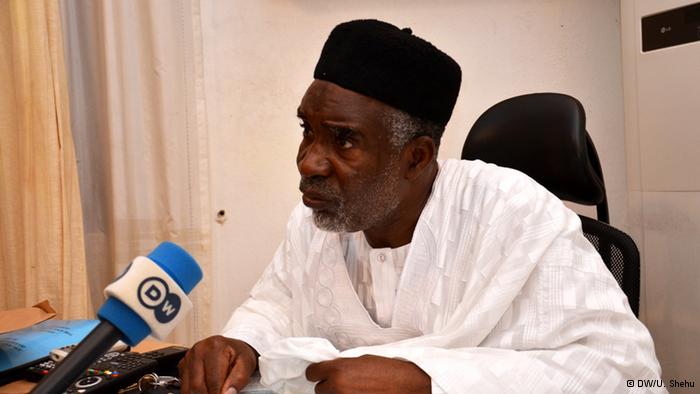

The Federal High Court in Abuja has adjourned a suit filed by Nigeria Democratic Congress (NDC)
The Federal High Court in Abuja has adjourned a suit filed by Nigeria Democratic Congress (NDC) seeking an order striking down Sections 138 and 77(5) of the new Electoral Act, 2026, to June 9 for hearing.
The case listed on the day’s cause list could not proceed due to Justice Mohammed Umar’s absence.
Although the NDC’s lawyer, Vincent Ottaokpukpu and the defence lawyers, including O.J. Opawale, were in court, the judge was said to be on another official engagement.The matter was subsequently fixed for June 9 for hearing.
Justice Umar had, on May 8, fixed yesterday for the hearing of the case. The NDC, in the suit, argued that the two sections are inconsistent with the 1999 Constitution (as amended).
The NDC, which was registered by the Independent National Electoral Commission (INEC) on Feb. 5, had filed the suit marked: FHC/ABJ/CS/635/2026.
The party, in the originating summons, sued the Attorney-General of the Federation (AGF) and Clerk of the National Assembly (NASS) as first and second defendants.
It also joined Senate President and Chairman of the National Assembly, Godswill Akpabio, and INEC as third to fourth defendants respectively.
Ottaokpukpu, who filed the suit on March 27, prayed the court to grant their reliefs.
The lawyer sought an order striking down the provisions of Section 138 for being inconsistent with the compulsory provisions of Sections 65 (2) (a), 106 (1) (c), 131 (1) (d), 177 (1) (d) and 66 (1) (i), 107 (1) (i), 137 (1) (j) and 182 (1) (j) of the 1999 Constitution (as amended).
He sought an order directing the 1st, 2nd and 3rd defendants to amend and re-enact a new provision of the Electoral Act, 2026 to restore “qualification” as a ground of challenging the return of any candidate into the seats of the House of Representatives, Senate, House of Assembly, president and governor.
He said this is in line with the provisions of Sections 65 (2) (a), 106 (1) (c), 131 (1) (d), 177 (1) (d) and 66 (1) (i), 107 (1) (i), 137 (1) (j) and 182 (1) (j) of the constitution.
Ottaokpukpu equally sought an order striking down Section 77 (5) of the Electoral Act, 2026 for being inconsistent with the provisions of Sections 40 and 65 (2) (b), 106 (1) (d), 231 (1) (c) and 177 (1) (c) of the 1999 Constitution, among others.
In the affidavit in support of the suit, Ezechi Adaobi, a litigation secretary in the law firm of V-C Ottaokpukpu & Associates, said NDC, as a stakeholder in the Nigerian electoral process, will in future elections field candidates for elections, including the office of the president.
She said the National Assembly, under the 2nd and 3rd defendants’ stewardship, had, on February 18, passed the Electoral Act, 2026.